
Understanding Solventum RSU Vesting and Next Steps

You’ve spent the past three years patiently waiting, and now the day is here. The Restricted Stock Units (RSUs) you earned based on your 2022 services and received in 2023 vest February 7, 2026. Once that happens, the shares become fully yours to manage, sell, or hold. This milestone marks the realization of compensation tied directly to your 2022 contributions.
As with any form of equity compensation, vesting raises several important questions. What exactly happens when the shares vest, and how should they fit into your broader financial picture?
Cash incentive payments are easy to understand. You receive the funds and decide how to deploy them. RSUs carry more nuance. At vesting, they convert into unrestricted shares of Solventum stock and deserve the same level of planning as any meaningful financial asset.
This educational overview doesn’t attempt to cover every aspect of RSUs. Instead, it focuses on the mechanics of vesting and common planning considerations. Understanding both can help you make informed decisions with clarity.
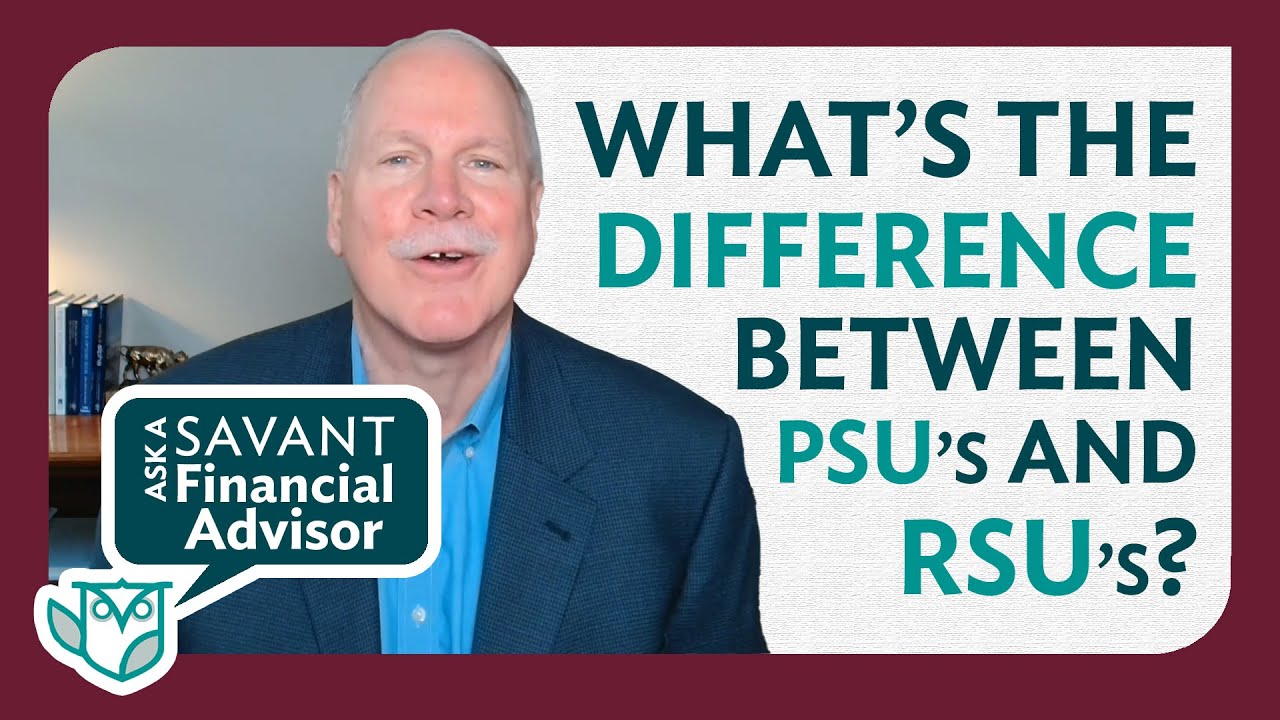
What’s the Difference Between Performance Stock Units (PSU) and Restricted Stock Units (RSU)?
In this edition of ask a Savant Financial Advisor, Chuck Steege is answering a common question among corporate executives: What’s the difference between Performance Stock Units, or PSUs, and Restricted Stock Units, known as RSUs, in the context of executive stock-based compensation?
What Happens When Your Solventum RSUs Vest?
One helpful way to frame RSUs is as deferred compensation. Rather than paying this bonus in cash, the company delivers it in shares of stock. That perspective explains much of the vesting process.
Until vesting occurs, Solventum records RSUs as a liability on its balance sheet. The company owes you the shares, and their value depends on the stock price on the vesting date. Provided you remain employed or satisfy retirement eligibility during the restriction period, ownership transfers to you once vesting completes.
After the vesting date, typically within a few business days, Fidelity will remove the RSUs from the “Solventum Restricted Stock Unit” category in your account. The shares then appear as unrestricted Solventum stock in your Fidelity brokerage account, alongside any 3M or Solventum shares you hold through the GESPP if you participated. At that point, you may take action as you see fit, subject to any company trading-window requirements that may apply.
While the conversion appears simple, several important steps occur behind the scenes. Taxes play a central role.
RSUs count as taxable income at vesting. Federal, state, Social Security, and Medicare taxes apply based on the fair market value of the shares on the vesting date.
Fidelity handles tax withholding automatically. A portion of your RSUs is withheld to cover taxes, and the remaining shares are transferred to your account. For example, if 119 shares vest and only 76 shares appear as available, the remaining shares will cover the required tax payments.
One detail deserves particular attention. Federal tax withholding on RSU income remains fixed at 22%, regardless of your actual marginal tax rate. State withholding also uses a flat rate. In Minnesota, that rate is 6.25%.
For higher-income households, these withholding levels often fall short of actual tax liability. Without advance planning, RSU income frequently results in an unexpected balance due at tax time. A full-year tax projection can help identify shortfalls early and allow for adjustments through payroll withholding or estimated payments.
On the positive side, dividends that accumulated during the three-year vesting period are paid to you in cash. In the 119-share hypothetical example, those dividends would total approximately $2,000 upon vesting.
What Should You Do with Your Solventum RSUs?
A simple question can help clarify the decision.
If this compensation arrived as cash rather than Solventum shares, would you choose to invest that money in Solventum stock today?
For many investors, that answer is no. If you wouldn’t purchase the shares with new money, holding them after vesting may not align with your broader strategy.
Selling the shares often allows for more intentional use of the proceeds. You may allocate the funds toward specific goals or reinvest in a diversified portfolio. This approach can also help reduce concentrated risk, particularly for employees who already hold company stock through prior awards or retirement plans.
Common uses for RUS proceeds include the following.
Investment-related:
- Reinvesting in a diversified brokerage portfolio
- Funding a Roth IRA through standard or backdoor contributions
- Contributing to a 529 college savings plan for children or grandchildren
Non-investment-related:
- Family travel or planned vacations
- Home improvement projects
- Strengthening cash reserves
- Education or tuition expenses
Your priorities may differ, and that’s entirely appropriate. What matters most is using this resource deliberately to support personal or financial goals rather than allowing it to accumulate automatically. Holding company stock remains an option, but excessive exposure to a single company can introduce unnecessary risk, even within otherwise strong financial plans.
Savant developed this educational overview to provide perspective as Solventum RSUs move toward vesting.
**Note to our clients: We will reach out individually in the coming days to review RSU vesting and discuss personalized planning considerations.
This is intended for informational purposes only. You should not assume that any discussion or information contained in this document serves as the receipt of, or as a substitute for, personalized investment advice from Savant. Please consult your investment professional regarding your unique situation
 Matthew J. Weier
Managing Partner / Financial Advisor
CFP®, CFA®, MBA
Matthew J. Weier
Managing Partner / Financial Advisor
CFP®, CFA®, MBA