
Financial Planning for Florida Transplants: What New Orlando Residents Should Know

Relocating to Florida brings new opportunities and new financial considerations. Many individuals and couples who move to Orlando are drawn by the warm climate, active lifestyle, and favorable tax environment. If you’ve accumulated significant wealth, reviewing your financial plan after a move is an important step to evaluate whether your plan continues to reflect your circumstances and objectives.
This guide can help you understand how Florida’s tax rules, cost of living, real estate market, insurance needs, and estate laws may influence your strategy. Working with a fee-only financial advisor in Orlando may be useful when evaluating how a relocation affects your broader financial picture.
What Financial Changes Should You Consider When Moving to Florida?
A move often prompts a full review of your financial picture. Florida’s lack of state income tax, its property tax structure, and its insurance requirements may affect your budget, long-term planning, and risk management needs. It can also influence how you approach retirement income, charitable giving, and legacy planning.
For many households, updating the financial plan shortly after relocating can help ensure key inputs reflect your new cost structure and planning environment.
How Does Florida’s Lack of Income Tax Affect Your Financial Plan?
Under current state law, Florida does not impose a state income tax. This may increase your retirement income or net earnings. The change can influence your approach to distributions, Roth conversions, and taxable investment income. Households with pensions, deferred compensation, or significant investment portfolios may experience changes in annual cash flow as a result.
Working with a local fiduciary who offers financial planning in Orlando can provide an opportunity to review how state-level tax differences interact with existing planning assumptions.
Do Residency Requirements Affect Taxes or Benefits?
Florida residency is based on several factors, including where you spend your time, your primary home, and your legal documentation. Updating your driver’s license, voter registration, and mailing address can help support your residency claim. These updates may influence how your former state taxes you and how certain benefits are applied.
Establishing Florida residency in accordance with applicable laws can help reduce administrative complications and support your long-term tax strategy.
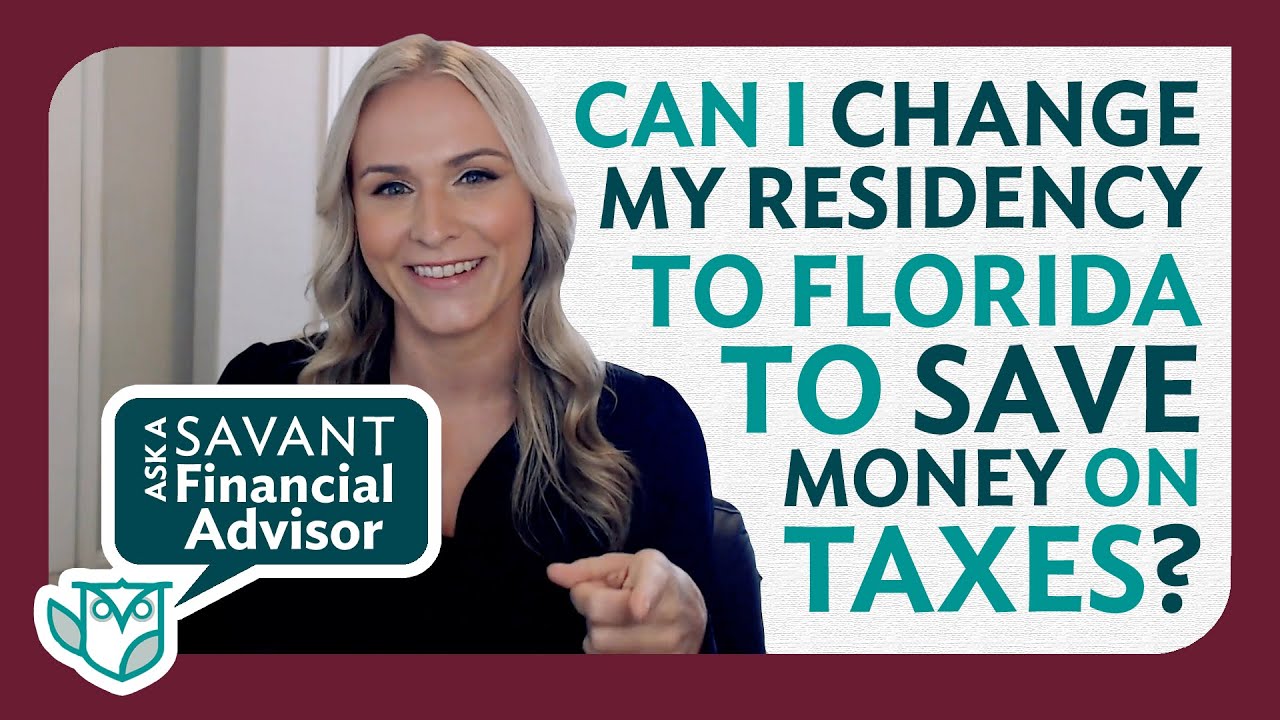
Ask a Savant Financial Advisor
Many retirees consider moving away from high-cost states such as Illinois, New York, and California for greener pastures, like Florida, in retirement. In addition to your regular living expenses like groceries and healthcare, there are many state-level taxes that vary greatly depending on where you live.
What Documents Should You Update After a Move?
Relocation affects more than your address. You may need to update your driver’s license, voter registration, investment accounts, insurance policies, and estate documents. Retirement accounts and life insurance policies should be reviewed for beneficiary accuracy. If you moved from a high-tax state, maintaining timely and accurate documentation can also help establish residency.
Should You Update Your Estate Plan When Relocating to Florida?
Estate laws differ by state. Wills, trusts, powers of attorney, and advance directives should be reviewed for Florida compliance. This is especially important for households with blended families, charitable goals, or multigenerational planning needs. Even if your goals have not changed, a review can help ensure your documents remain effective under Florida law.
A review of your estate plan also provides an opportunity to revisit your legacy goals, confirm your executor or trustee choices, and check that beneficiary designations align with your wishes.
How Do Florida’s Property Taxes Compare to Other States?
Florida’s property tax system differs from what many newcomers are used to. While rates vary by county, many households find taxes moderate compared with states in the Northeast and the West Coast. The homestead exemption can reduce your home’s taxable value. Portability rules allow you to transfer part of this benefit if you move within the state.
Understanding these rules can help you estimate the long-term cost of homeownership in Orlando.
What Does the Cost of Living Look Like in Orlando for High-Income Households?
Orlando offers a cost of living that is generally more moderate than many large metropolitan areas. Housing prices have increased in recent years, and homeowners insurance can be higher because of climate-related risks. However, the lack of state income tax and the region’s overall affordability often offset these costs.
Many families find they can reallocate savings to long-term goals, charitable giving, or travel. Updating your spending plan after six to 12 months in Orlando can help clarify how your new lifestyle affects your broader financial strategy.
Is Florida a Good Place to Retire Financially?
Florida has long appealed to retirees. The favorable tax environment, warm weather, and active communities provide a strong foundation for retirement planning. For high-net-worth individuals, the absence of state estate or inheritance taxes can simplify wealth transfer strategies.
Reviewing your retirement income plan after relocating can help ensure your withdrawal strategy supports both lifestyle and long-term sustainability.
How Can You Find a Financial Advisor in Orlando?
Selecting a local advisor can be beneficial when navigating Florida’s tax and legal environment. Look for a fee-only financial advisor for Florida transplants who acts as a fiduciary and provides comprehensive planning. Transparency, personalized guidance, and experience with high-net-worth households are common considerations.
A local advisor may also be familiar with state-specific requirements that may impact your estate planning, tax strategies, and insurance needs.
Can You Keep Your Financial Advisor from Your Previous State?
You may be able to continue with your advisor, depending on licensing and your comfort level. Some families choose to transition to a local fiduciary for convenience and for more direct knowledge of Florida laws. Others maintain their previous relationship but seek supplemental guidance from an Orlando-based team. The best option depends on your planning needs, complexity, and personal preference.
What Insurance Considerations Should You Revisit After Moving?
Insurance needs often change in Florida. Homeowners insurance may be higher because of hurricane exposure. Flood insurance is typically purchased separately. Auto insurance rates can differ as well. Reviewing these policies can help ensure your coverage matches Florida’s risk environment.
High‑net‑worth households may also review whether an umbrella policy is appropriate given their overall risk profile.
How Can You Maintain Investment Continuity During a Move?
Relocation can be a busy time. It may be helpful to avoid large investment changes until your full financial plan is reviewed. A clear understanding of your cash flow, new tax situation, and long-term goals can help guide any adjustments.
A fiduciary advisor can help review how existing investment strategies align with your updated planning considerations.
How Can You Help Build Your Financial Life in Orlando?
A move to Florida can affect your financial future. Understanding how state laws and local costs may affect planning considerations is an important first step. Connect with a fee-only financial planner in Orlando to provide an opportunity to discuss goals and planning priorities. Schedule an introductory consultation today to get started.
This is intended for informational purposes only. You should not assume that any discussion or information contained in this document serves as the receipt of, or as a substitute for, personalized investment advice from Savant. Please consult your investment professional regarding your unique situation.