
Q1 2026 Market Review and Outlook
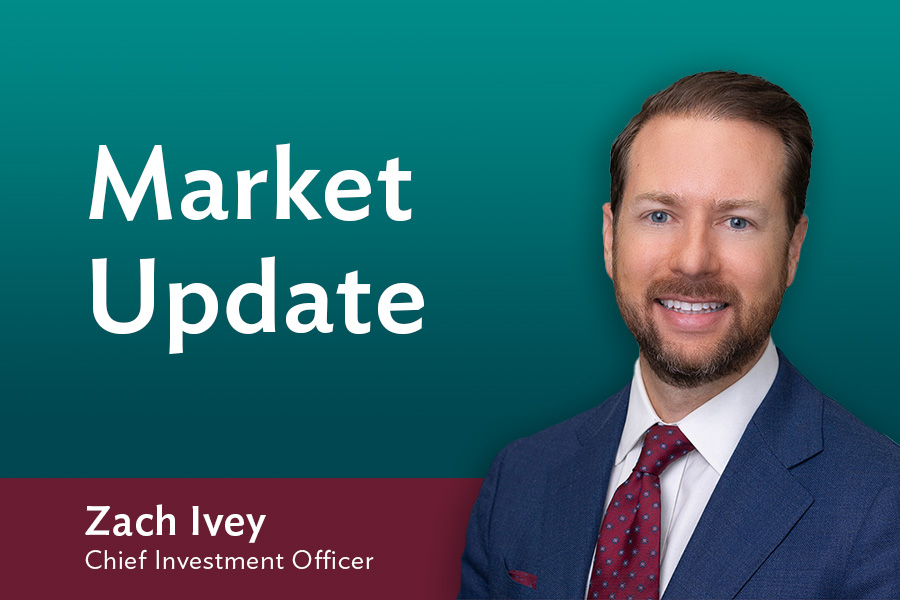
April 2026
Dear Clients and Friends,
Some quarters feel like a slow unfolding. Others arrive quickly, test conviction, and move on before the narrative fully settles. The first quarter of 2026 was the latter. Markets digested shifting expectations around growth, inflation, and policy, all while investors tried to separate signal from noise in an environment that continues to reward patience over prediction.
Geopolitics: Headlines That Move Markets, Not Long-Term Outcomes
Geopolitical events once again reminded investors how quickly headlines can influence short-term market behavior. During the quarter, geopolitical conflict with Iran introduced renewed uncertainty around global energy supplies, inflation expectations, and economic stability. Oil prices reacted swiftly, and markets grappled with the potential ripple effects on growth and monetary policy.
History shows, however, that geopolitical events tend to have a much greater impact on sentiment than on long-term investment outcomes. These moments can feel urgent and unsettling in real time, but markets often show an ability to process new information and adjust prices accordingly. While conflicts and political shocks can create temporary volatility, they do not typically alter the long-term trajectory of diversified portfolios.
For long-term investors, the challenge is not ignoring the news but resisting the urge to act on it. Energy prices will fluctuate, inflation expectations will move, and headlines will evolve, often faster than any individual can react prudently. As investors, our discipline is to distinguish between short-term noise and long-term fundamentals, staying focused on diversification, valuation, and the objectives that matter most.
Geopolitics may shape the conversation, but it should not dictate strategy.
U.S. Large Companies (S&P 500 Index) fell -4.3%, while U.S. Small Companies (Russell 2000 Index) returned 0.9%. (Morningstar)
Global Markets: Leadership Continues to Come from Abroad
One of the more consistent and underappreciated stories in recent periods has been the strength of international markets relative to the U.S. That trend continued in the first quarter, as international stocks once again outperformed U.S. stocks, despite far less attention in headlines and market commentary.
While U.S. markets remain home to many of the world’s most innovative companies, international markets entered the year with different valuation profiles, economic backdrops, and policy dynamics. In several regions, improving earnings expectations, currency movements, and less concentrated market leadership contributed to stronger relative performance.
International stocks (MSCI EAFE Index) lost -1.1%, while Emerging Markets (MSCI Emerging Markets Index) were slightly negative, declining -0.1%.
This leadership rotation serves as an important reminder that markets do not reward familiarity or narrative dominance. Instead, they reward diversification and patience. Periods of U.S. outperformance can last for years, just as periods of international leadership can arrive unexpectedly and persist longer than anticipated. Maintaining global exposure helps ensure that portfolios are positioned to participate wherever opportunities emerge, not just where attention is focused.
Interest Rates, Inflation, and the Role of Bonds
Bond markets spent much of the quarter responding to evolving views on inflation persistence and central bank policy. Small changes in expectations can have an outsized impact on fixed income returns, and Q1 was no exception.
Despite short-term fluctuations, bonds continue to play a critical role in portfolios by providing income, diversification, and ballast during periods of equity uncertainty.
The U.S. Bond Index (Bloomberg U.S. Aggregate Bond Index) declined -0.05%.
Alternative Investments: Staying Selective
Alternative investments continue to receive attention across the investment landscape. As always, our approach remains measured and evidence-based. We focus on strategies that have the potential to help improve diversification and risk-adjusted characteristics rather than chasing complexity for its own sake.
During the quarter, reinsurance, private credit, and multi-strategy approaches delivered varied results, reflecting their distinct roles within portfolios.
Reinsurance (Swiss Re Global Cat Bond Index) gained 1.9%, Direct Lending (Cliffwater Direct Lending Index) returned 0.7%, and Multi-Strategy (combination of Credit Suisse Multi-Strategy and Wilshire Liquid Alt Multi-Strategy indexes) added 2.1%.
Looking Ahead with Discipline
We move forward not with a prediction, but with a plan. Markets will continue to evolve, surprises will occur, and innovation will persist, often in unexpected places. Our role is to remain disciplined, diversified, and aligned with your goals while adapting portfolios thoughtfully as conditions change.
As always, we are deeply grateful for your trust and partnership.
Zach Ivey, CFA®, CFP®, MBA
Chief Investment and Advice Officer
Savant Wealth Management
Historical performance results for investment indices, benchmarks, and/or categories have been provided for general informational/comparison purposes only, and generally do not reflect the deduction of transaction and/or custodial charges, the deduction of an investment management fee, nor the impact of taxes, the incurrence of which would have the effect of decreasing historical performance results. It should not be assumed that your account holdings correspond directly to any comparative indices or categories.
 C. Zach Ivey
Chief Investment and Advice Officer
CFA®, CFP®, MBA
C. Zach Ivey
Chief Investment and Advice Officer
CFA®, CFP®, MBA