
When Are Volatile and Negative Markets an Opportunity?
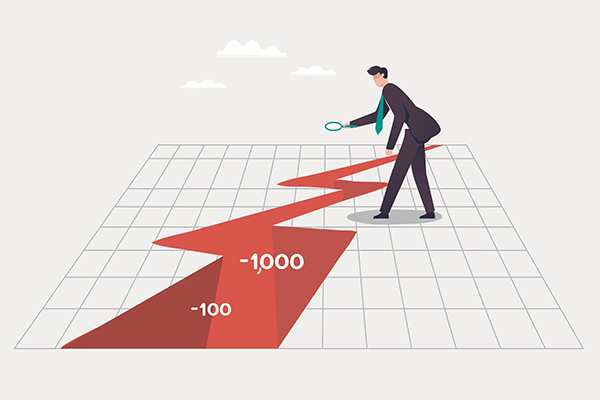
Most investors immediately think there is nothing good about a negative market. As indexes fall, many begin to worry about what this means and when it will stop. Investors, especially those who manage their portfolios on their own, may naturally begin to worry. But markets like this may present some potential opportunities for investors.
Down Markets Can Present an Opportunity to Diversify a Portfolio and Invest New Cash
- If your portfolio is not diversified and you carry more risk by investing in a few individual stocks, this may be an opportune time to trim those concentrated stock positions and diversify your stock exposure further. Selling at lower prices can result in lower capital gains and potentially lower taxes. When you reinvest the proceeds into other positions, you also purchase investments at lower prices. This approach may help manage taxes and allow reinvestment at lower market values. When the market likely rebounds, you may participate in the recovery with a more diversified portfolio.
If you are an investor who has been managing your own portfolio, do not let market declines alone prevent you from diversifying further. Many investors stall because they believe waiting for the recovery will yield better results. This thinking can prove flawed and may result in higher taxes when markets rebound. It may also mean having less to reinvest after taxes and purchasing other positions at higher prices.
Those with concentrated portfolios may see larger declines in markets like those we are experiencing now. A long-term diversified approach to investing has historically helped portfolios manage risk in volatile markets.
- A declining market can be an opportunity for some investors to invest the cash that they have earmarked for long-term savings. This can be as easy as contributing to IRAs, retirement accounts, or personal portfolios while the markets are lower. Maintain a long-term perspective and evaluate potential opportunities created by market pullbacks.
Tax-Loss Harvesting Opportunities
We seek to manage portfolios in a tax-efficient manner. When the markets are falling, paying close attention to opportunities to sell positions at a loss can help support long-term tax planning. Simply put, it means selling positions when the markets are negative to realize the capital loss now for tax purposes. An investor would then purchase a replacement position similar to the one sold. This may allow an investor to stay fully invested in their portfolio and maintain the agreed-upon allocation, allowing participation in a recovery while booking capital losses. Let’s go through a hypothetical example of how this could work.
You own 100 shares of the S&P 500 ETF with a total value of $20,000, and the loss on the position is $2,000. You sell the position and realize the loss for tax purposes. You reinvest the proceeds in a similar investment, buying $20,000 of a large-cap stock ETF. This approach allows you to remain invested in a similar market segment while realizing a $2,000 tax loss, subject to IRS rules. When the markets likely rebound, you may participate in the recovery through the replacement position.
This technique can be very effective, but it requires careful attention to IRS rules. These rules are called wash sale rules. This rule states that you cannot sell an investment for a loss and repurchase the same or substantially identical investment within 30 days of selling the position that produced the tax loss. If you do this, the IRS will disallow the loss.
We sometimes hear investors say they review tax-loss opportunities at the end of the year, in December. This has been a standard approach for many brokers or investors managing their portfolios. If this is your approach, you may miss opportunities earlier in the year. The markets do not move in one direction for an entire year. For example, in 2025, equity markets finished the year higher overall. However, if you look back to April 2025, when tariff concerns surfaced, the markets declined sharply. This period presented an opportunity to consider tax-loss harvesting. Had you waited until December, the losses may have disappeared, and you would have missed the opportunity.
Next Steps
These are big decisions, and declining markets may rattle even the most seasoned investor. If you have concerns about your portfolio’s risk or concentration, or about managing investments in a tax-efficient manner during down markets, seeking a second opinion can be a helpful step in evaluating your financial strategy. This may be an opportune time to seek a second opinion.
This is intended for informational purposes only. You should not assume that any discussion or information contained in this document serves as the receipt of, or as a substitute for, personalized investment or tax advice from Savant. Please consult your investment or tax professional regarding your unique situation.
 Angie M. Stephenson
Managing Partner / Financial Advisor
CFP®, CPA/PFS
Angie M. Stephenson
Managing Partner / Financial Advisor
CFP®, CPA/PFS