
How Kevin Warsh Plans to Reshape Federal Reserve Policy
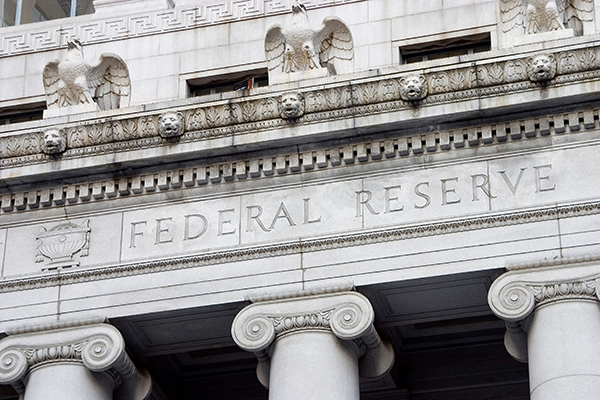
Kevin Warsh begins his tenure as Federal Reserve Chair with a clear agenda for scaling back the central bank’s role. He argues that the central bank allowed its balance sheet, communications strategy, and market footprint to expand well beyond what is necessary to achieve price stability and maximum employment.
Rates Over Asset Purchases
The most important policy distinction may be his preference for using the short-term interest rate as the Fed’s primary tool. Warsh has argued that rate policy reaches the economy more broadly, while large-scale asset purchases work through narrower financial-market channels and can distort the allocation of capital. Post-2008, the Fed increasingly used the balance sheet not only as a crisis tool, but as an ongoing instrument to influence long-term Treasury yields, mortgage rates, and broader financial conditions.
His Case Against Mortgage Bonds
His skepticism is especially relevant for mortgage-backed securities. The Fed’s large holdings of agency MBS (mortgage-backed securities) were established during a period of extreme market stress. Warsh has long questioned whether the central bank should direct credit toward any one sector of the economy. In his view, buying mortgage bonds can blur the line between monetary policy and housing policy. A Warsh-led Fed may be more likely to prefer a smaller, simpler balance sheet concentrated in Treasuries, with mortgage bonds allowed to run off over time rather than treated as a standing policy lever.
During his first stint at the Fed, Warsh supported the major emergency actions taken during the financial crisis, casting no dissenting votes at federal open market committee (FOMC) meetings. However, he grew increasingly concerned that the Fed would normalize extraordinary policies after the emergency had passed. He is more skeptical than the post-crisis Fed consensus of turning crisis-era tools into permanent features of monetary policy.
The Limits of the Chair
The limits of the chair’s power should not be overlooked. The Federal Reserve is a committee-based institution, and the chair has one vote on the FOMC. Warsh can shape the agenda, influence the statement, set the tone of press conferences, and lead the staff, but he still needs to build consensus among governors and regional reserve bank presidents. His early agenda may focus on a less expansive communications strategy, a review of forward guidance and the dot plot, continued balance-sheet reduction, a preference for Treasuries over mortgage-backed securities, and a narrower definition of what belongs inside the Fed’s mandate.
Sources:
Federal Reserve Board – Kevin Warsh, Chairman
Commanding Heights April 25 2025 DC.pdf
Rejecting the Requiem – Federal Reserve Board
Large-Scale Asset Purchases – FEDERAL RESERVE BANK of NEW YORK
The Fed – Federal Open Market Committee
Introduction to the FOMC | St. Louis Fed
Warsh takes Fed pulpit with immediate challenges, longer-term agenda | Reuters
 Michael R. Waldron
Senior Investment Strategist / Client Advisor
CFP®, CFA®
Michael R. Waldron
Senior Investment Strategist / Client Advisor
CFP®, CFA®