
Why Richard Brothers Chose Savant: A Conversation with Randy and Neal Richard
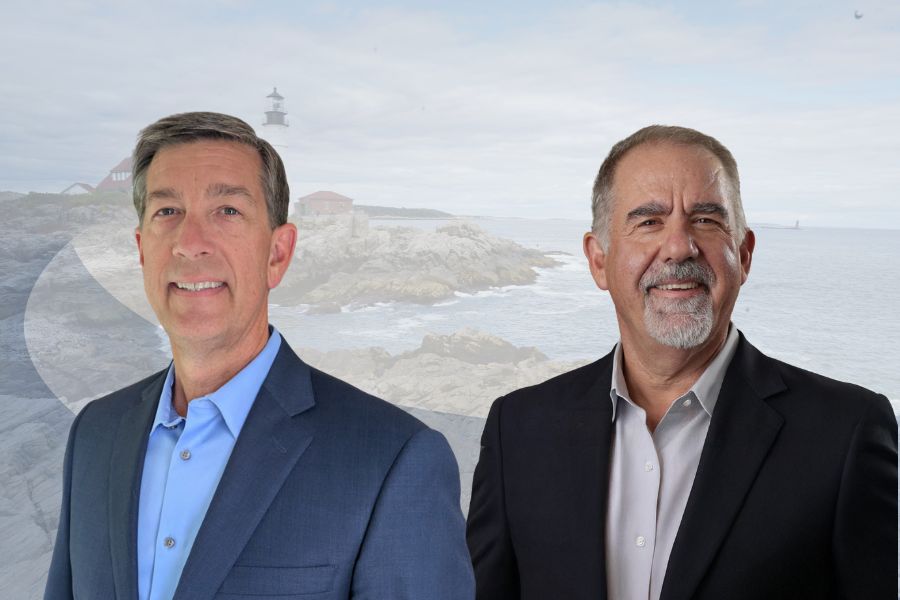
When Richard Brothers Financial Advisors joined Savant Wealth Management on June 30, 2026, the partnership marked Savant’s first office in Maine. This brought together two firms built around the same core belief: clients are best served by planning that considers the whole picture, not just the portfolio.
Founded in South Portland in 1996, Richard Brothers built its reputation on a “Whole Picture Planning” approach that folds investment management, retirement planning, tax considerations, risk management, and long-term goals into a single strategy. That philosophy aligned closely with Savant’s own, and it created a natural foundation for partnership.
To understand what drove the decision, Savant spoke with co-founders Randy Richard, CEPA®, and Neal Richard. Together, they offered perspective on 30 years in business as brothers, why they chose Savant over roughly 50 other interested firms, and what comes next for their clients and for Maine.
Two Brothers, One Business, Three Decades
Randy and Neal are each other’s only sibling, and they’ve been running businesses together since young adulthood, starting with a painting company before they built Richard Brothers. “We learned very early in life how to work together and utilize each other’s strengths,” Randy says.
That division of labor has held for three decades. Randy handles the outward-facing half of the partnership: client conversations, coaching, and mentoring. Neal owns the process, structure, and implementation, and he makes sure details don’t get dropped. “We’re very intentional about not violating each other’s lanes,” Randy says. Neither brother tries to take on the other’s strengths; they lean into their own, to the point where one can tell the other, “You don’t need to show up to that,” and both know the business is covered.
Randy expects that dynamic to be tested now that more people, and more demands, are in the mix, but he’s confident it holds. “You get the combination of us, and there’s probably nothing we can’t accomplish.”
Why Savant
Values, not just numbers, drove the decision to partner with a larger firm. “It started with the core values, and how close the alignment was,” Neal says. Brent Brodeski, Savant’s founder and CEO, has told the brothers he’s rarely seen a values match this tight with a partner firm.
Values alone don’t complete a deal like this, though. The brothers made clear they wouldn’t accept any step back in client experience just to create a liquidity event for themselves. “We couldn’t look ourselves in the mirror and say, ‘Oh, well, we took a step back just so we could have a liquidity event for the Richard Brothers,’” Randy says. “It was never about that.”
Complementary strength made the math work. Richard Brothers brought deep experience in succession and exit planning for business owners, reflected in Randy’s Certified Exit Planner Advisor® (CEPA®) designation, along with three decades of relationship depth in Maine. Savant brought a bench Richard Brothers’ clients increasingly needed: tax planning, estate and wealth transfer strategy, and an investment platform built for a $55.7 billion firm rather than a $240 million one. Neal had watched client demand for tax and estate work outpace what he could comfortably refer out, and he saw Savant’s bench as a way that could help deliver that work directly.
The brothers didn’t rush the decision. Practicing what they preach as exit planners, they engaged FP Transitions early, wrote out independently what they each wanted their “next chapter” to look like, and compared notes to surface non-negotiables before talking to a single buyer. Roughly 50 firms showed interest; with FP Transitions’ help, they narrowed that list to 10 or 12, and Savant stood out early. “This firm just looks very closely aligned,” Neal recalls thinking the first time he studied Savant’s site and values. He told his wife that, based on what he’d seen so far, he’d pick Savant.
What he believed separated Savant from the rest of the field, in Neal’s telling, was the follow-through, not just the pitch: a methodical process, clear communication, and consistent follow-up, in contrast to other firms that said one thing and did another. For Randy, arriving at this point feels less like an ending and more like a reset. “At this stage of my professional life, I’m more excited and motivated than ever,” he says.
What Doesn’t Change
If there’s a single word that comes up most when Neal talks about the next year, it’s continuity. He’s personally sitting in on many client meetings during the transition and tracking staff feedback, because he knows what questions are coming: Who’s my advisor now? Will my fees change? Is this going to start feeling like a call center?
His answer, consistently: the same team, the same office, the same people who’ve been managing your plan. What’s different is the depth behind them. Neal has coached his team to be candid rather than falsely expert when new topics come up, helping provide a steady, confident tone rather than hedging. When a team member brings him a question outside their expertise, he routes them directly to the right Savant specialist while staying looped in himself.
Randy is measuring success in concrete terms: client retention, an integration where the team actually uses Savant’s centralized resources instead of quietly recreating its own systems, and visible growth. He’s watching whether the team lets go of tasks, like HR and recruiting, that a nine-person firm used to handle alone. If a year from now the team is still doing things “the old way” in areas Savant should now handle, he’ll consider that a real setback worth calling out. Neither brother frames this as charity. “We’re charitable people, but this isn’t charity,” Randy says. They expect a return on the decision, not just goodwill.
A Different Kind of Exit Story
Randy’s CEPA® credential helps illustrate how he’s spent his career guiding business owners through the exact process he and Neal just completed themselves, and going through it changed how he’ll counsel clients going forward. The version of exit planning that lives in a slide deck, he says, undersells how much of a grind the real thing is: data rooms, documents, and phases that stretch out even when you want to move faster. Neal felt that grind from the implementation side, fielding the bulk of the paperwork and the late-night emails from Savant’s deal team as the process moved toward closing. He respects the diligence behind it, though he doesn’t miss those weeks now that they’re behind him. Preparation has to cover both sides of the ledger, an owner’s personal financial readiness and the company’s own value drivers.
He points to a figure that sticks with him: by his estimate, most business owners who start the process never actually complete a sale. Deals fall apart for plenty of reasons, but one of the most common is the owner walking away, often because they never built a genuine vision for what comes next, or because they’re afraid of becoming, in his words, “old and useless” after selling. Owners who wait for a disruptive event to force the issue, what Randy refers to as the “5 Ds” (death, divorce, dissension, disability, and distress), a framework he picked up through his CEPA® training, end up making the decision reactively, on far worse terms.
Having gone through it themselves, the brothers now bring something more unique than technical exit-planning knowledge: firsthand experience completing the process and an understanding of how it feels. Randy plans to bring that experience into future client conversations, and into a planned podcast episode with Savant on how living their own exit helps make them better guides for the business owners they serve.
First in Maine
Richard Brothers’ partnership with Savant is also a bet on the state itself. Randy sees a wave of business transitions coming, with a meaningful concentration of privately held businesses and multigenerational wealth in Maine, and not enough qualified advisors to guide owners through it. He’s watched local banks see clients through a liquidity event only to lose the relationship, and the assets, once the money moves out of state.
His critique of how some national firms enter new markets is pointed: firms that “fly a plane into Maine, land it, put their big name on the door” and expect business to follow. In Randy’s experience, Maine rewards relationships, vetting, and proven local commitment instead. Savant’s approach, by his account, was different: it partnered with an established, local firm rather than parachuting in cold, and it kept Randy, Neal, and their team exactly where clients already know to find them. Randy sees an opportunity to work more closely with local banks so proceeds from a sale or family transition can stay invested in Maine, managed by people who already know the client, an outcome he’s optimistic about but frames as his own outlook rather than a promise of results. Neal’s read on the same opportunity is more logistical: making sure the office has the staffing and systems to handle new volume without straining the team that’s already serving these clients.
Part of what draws Randy to this next chapter is the chance to teach. Coaching and mentoring have always come naturally to him, and he treats them as seriously as any technical part of the job, whether he’s helping walk a client through the hardest decision of their business life or showing a newer advisor how to have that same conversation. Joining a larger firm doesn’t dull that instinct; it gives him a wider room to practice it in, more advisors to mentor and more business owners to reach with the same patient, walk-through-it-together approach that built Richard Brothers in the first place. Neal’s version of the same instinct looks quieter: fewer stages, more one-on-one working sessions, walking a single advisor through a single process until it sticks.
That instinct reflects a theme that ran through the brothers’ conversations about joining Savant: an eagerness to be major contributors to the firm, not principals who simply sold a business and stepped back. Three decades after two brothers taught themselves how to run a company together, they’re applying the same instinct to a much larger one.